A capacity test that turned into a lesson in placement
Jirby’s BBQ sets up this Goldies backyard smoker video with a clear question: how far can the pit’s capacity really be pushed before the cook starts fighting back? The direct answer, based on the video, is that seven briskets can fit on the smoker and finish, but not without constant adjustment and a fair amount of second-guessing along the way. This is not presented as a polished demonstration of effortless volume cooking. It plays more like a live test of how much a backyard offset will forgive when the load is heavy and the front end of the pit is clearly hotter than the rest.
That is what makes the cook interesting. The video is not just about stacking briskets onto a large smoker. It is about what happens after they go in: how they are trimmed, where they land, how one brisket reacts to the hot spot, and how the whole cook changes once the meat starts shrinking and the spacing shifts. Jirby keeps returning to the same problem from different angles, which gives the video a practical center. The issue is not whether the smoker is large enough on paper. The issue is whether a person can stay ahead of a crowded pit long enough to keep the briskets from turning against each other.
Why the briskets were arranged around the firebox hot spot
The setup matters here because the video is built around the firebox end of the smoker. Jirby calls out the hot spot near the firebox opening and uses a Tyer Sink probe on the brisket closest to that area so he can track both internal and ambient heat. That decision gives the cook a clearer shape than just saying “I put briskets on a smoker.” He is trying to see what the hottest section of the pit does to the meat before the briskets have fully settled.
He also gets help from Jonny, who suggests an orientation that keeps the briskets as far from the firebox opening as possible and uses the water pan as a buffer. That guidance becomes the first real sign that the cook is going to be about management rather than brute force. The briskets are not treated as interchangeable objects. Their position matters. Their direction matters. The first brisket near the firebox is the one being watched most closely because it is the one most likely to show the pit’s personality.
The seasoning is intentionally plain: salt and pepper mixed together for speed. Jirby says the trim is rushed too, and the video makes it obvious that he is trying to move quickly through the prep because of the number of briskets involved. That speed is part of the story. It helps explain why the cook has so much moving at once and why the results end up looking more like a stress test than a careful, single-brisket showcase.
What changed when the cook stayed low for too long
The first major turning point comes a few hours into the cook, when the briskets begin to show color. Jirby notes that they all look fairly even at first, which suggests the smoker is doing a decent job across the main field. But the brisket near the firebox starts showing harder color and more intense bark development than the others. That front position becomes the warning sign for the rest of the day.
He responds by shifting the briskets around and later raising the temperature, because running the pit too low for too long would stretch the cook into something unmanageable. That slow start is central to the final result. Jirby later says one of the strange things he saw was a skin-like layer on the outside of the brisket, especially on the one that spent the most time in the hot zone. He describes it as a dry, almost tough outer layer that did not seem to behave like the rest of the fat on the brisket.
Rather than treating that as a simple burn, he keeps coming back to the possibility that the low temperature and long cook time affected how the fat rendered. In his telling, that early low-and-slow stretch may have created a surface issue that the rest of the cook could not fully fix. That is a useful distinction because it moves the conversation away from “the smoker failed” and toward “the cook strategy created a problem.” The pit did what it was asked to do; the question is whether the briskets were asked to spend too long in a range that worked against them.
The two slices that told the story best
By the end, Jirby narrows the whole experiment down to two briskets: the one that sat closest to the firebox early on, and the one he picked as the best of the seven. Those slices become the proof points for the entire cook.
The best brisket, in his view, had the strongest outside feel and the best overall bark. He says the point and flat felt right in the hand and that it avoided the weird surface effect as much as the others. Even there, though, he still sees signs that the brisket finished drier than he wanted. The grain is intact, the texture is not falling apart, and the fat on the point slice appears to render better than the flat. But he keeps returning to the idea that the brisket should have been juicier.
The brisket that began in the hot spot tells a different story. Jirby is more impressed by the fat render on that slice and by the way the point side seems to have benefited from the position near the firebox. He says that exposure gave the brisket a sweeter, better overall profile in places, even though the outside also showed the most damage early. In other words, the brisket that looked worst partway through may have ended up tasting better than expected, while the one that avoided the hottest area was cleaner but not necessarily more satisfying.
That split is what keeps the video from becoming a simple win-or-loss story. The briskets did not divide neatly into good and bad. They became different kinds of compromises.
Why the creator was harder on the cook than the meat
The sharpest part of Jirby’s commentary is how much of the final judgment lands on the process rather than on any single brisket. He says the whole cook never quite felt right, that the bark and the stall behaved strangely, and that the meat seemed different from the start. He also mentions that the long hickory cook likely pushed the smoke flavor harder than he preferred.
That self-critique is important because it changes the tone of the video. He does not hide behind the smoker or pretend the results were ideal. He openly says the briskets were a little too smoky for his taste, that the low temperature may have made the cook drag, and that he likely sacrificed the overall batch while trying to protect the brisket in the hot spot. By the end, he calls the effort a mixed result and says it produced seven mediocre briskets rather than seven great ones.
Still, even in that criticism, he leaves room for the smoker itself. The Goldies backyard offset clearly has room for a serious load, and the video proves that seven briskets can physically be handled in that space. What it does not prove is that volume alone guarantees consistency. The pit can carry the weight. The cook still has to control the variables.
What this experiment says about running a crowded offset
The bigger takeaway is not just that the Goldies backyard smoker can fit seven briskets. It is that a crowded offset punishes inattention quickly. Placement around the firebox matters. Temperature matters. The length of time spent too low matters. Even the trim and the choice of wood matter once you start cooking at this scale. Jirby’s video makes all of that visible without turning it into a lecture.
There is also a practical honesty in the way he frames the final outcome. He does not pretend that every large-cook test should end in a perfect slice. Sometimes the most useful barbecue video is the one that shows the rough edges: a brisket that dries out in one area, another that benefits from the hot side, and a pit that asks for more babysitting than the cook expected. That is the value here.
For anyone trying to understand the Goldies backyard smoker as more than a showpiece, this video answers a useful question. Yes, it has the capacity for a big brisket load. No, that does not mean the cook gets easier. In Jirby’s hands, the smoker becomes a reminder that the difference between a crowded offset and a successful one is usually a series of small decisions made before the meat ever comes off the pit.
Watch the original video: https://www.youtube.com/watch?v=_CzLAzDvCcs
PIT CULTURE MERCH
Two Pit Culture designs from Texas Thread Theory for people who live for fire, smoke and low-and-slow weekends.
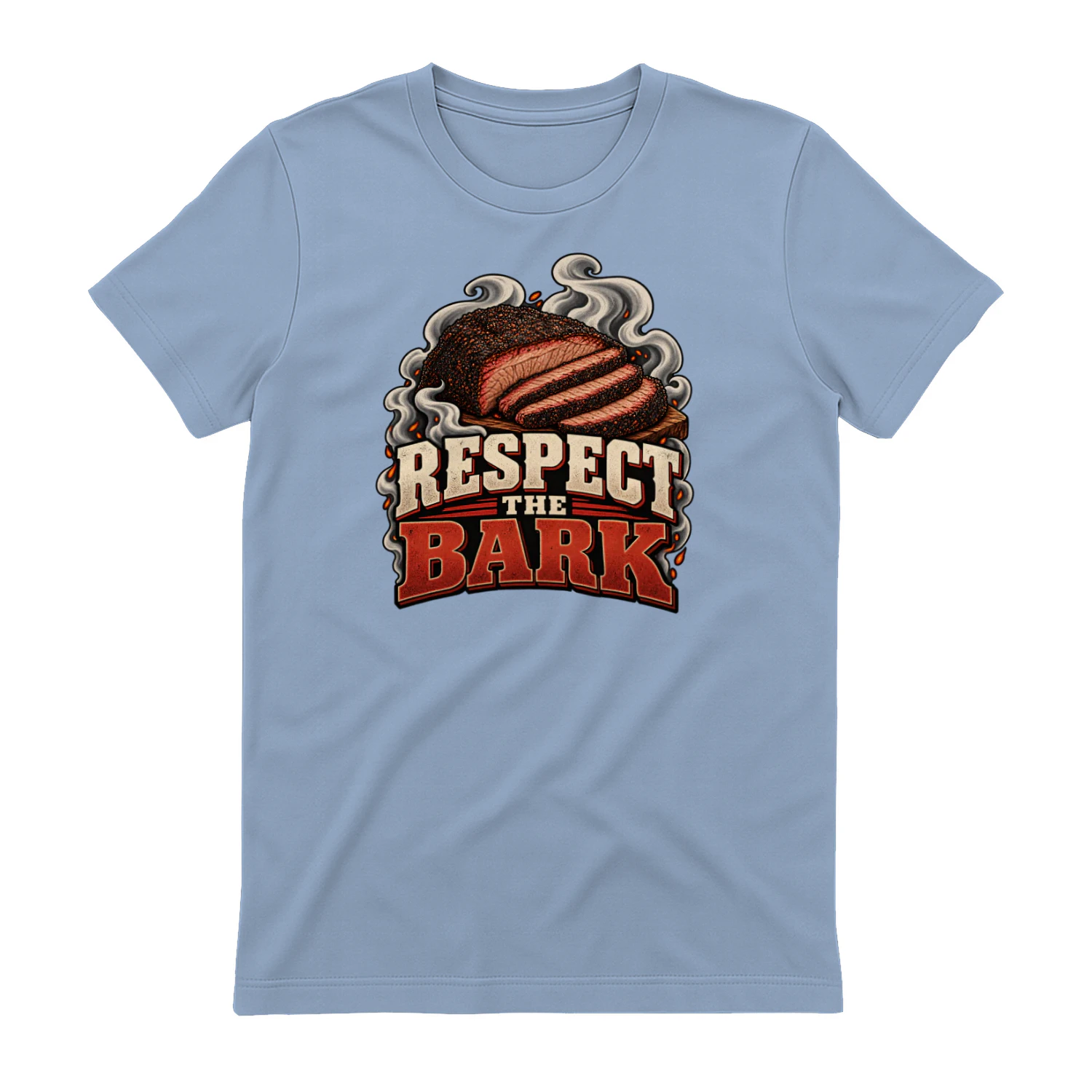
Respect the Bark
Official Pit Culture merchandise from Texas Thread Theory, built for people who live for fire, smoke and low-and-slow weekends.
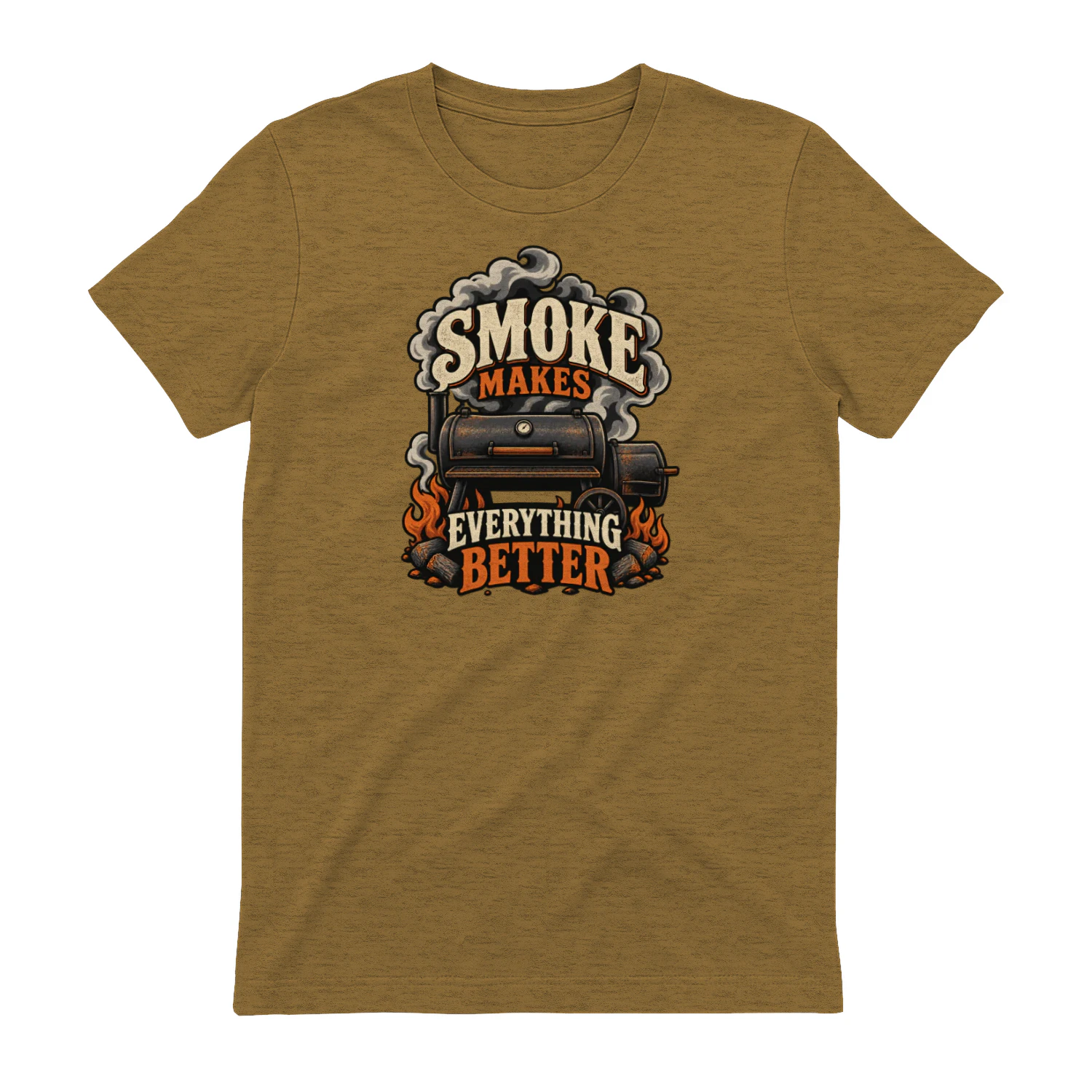
Smoke Makes Everything Better
Official Pit Culture merchandise from Texas Thread Theory, built for people who live for fire, smoke and low-and-slow weekends.
