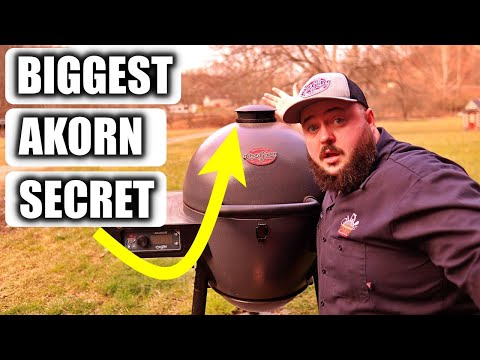
What this turkey breast method is solving
The clearest thing about Cookout Coach’s smoked turkey breast is that it is not trying to be a trophy bird. It is trying to solve a familiar holiday problem: how to put out a turkey that people will actually want to eat, without making the cook itself harder than it needs to be.
His answer is direct. Start with a bone-in turkey breast that is already brined in the bag, add flavor from the inside with a Cajun injection, smoke it on a kamado, then finish the skin with butter so the outside keeps up with the juiciness underneath. That is the whole shape of the cook. No elaborate trimming, no complicated sauce work, and no attempt to turn Thanksgiving dinner into a lab project.
That simplicity matters because the video is built around a very specific kind of bird: an 8-pound bone-in breast. Cookout Coach makes it plain that he chose the breast instead of a whole turkey because that is the part most people want. The dark meat discussion is almost beside the point. The breast is the cut that feeds the table cleanly, and it is the cut that most often needs help staying moist.
Why the injection matters here
A lot of turkey talk starts with brining, but this cook uses a second layer of seasoning that seems to matter more to the creator: injection. He does mention the store package brine, and he explains why it matters, but he does not treat that as the end of the job. Instead, he goes straight to a new Cosmos Q Cajun chicken injection because, in his view, poultry benefits from flavor moving into the meat.
That choice also tells you something about the structure of the recipe. The breast already has moisture from the packaged solution, but Cookout Coach wants something more than moisture. He wants seasoning that reaches beyond the surface. The injection is mixed according to the label with distilled water, and he notes that it brings a little heat. Not overwhelming heat, just enough to wake the turkey up.
He also explains how he thinks about injecting in practical terms: keep the needle holes deep in the meat, distribute the liquid evenly, and stop when the breast will not take any more. That is useful because it frames injection as a tool for coverage, not just a way to pump more liquid into the bird. The turkey breast is already plumped up by the time he is done, and that visual cue becomes the marker that the job is finished.
Setting up the kamado for clean smoke
The other major decision in the video is what he does not add. Cookout Coach uses B&B Hickory lump charcoal, but he does not add wood chunks. His reasoning is simple and practical: he does not want an over-smoked Thanksgiving turkey.
That is one of the most grounded parts of the whole feature. Holiday turkeys often fail because people treat smoke like a contest instead of a seasoning. Here, the charcoal supplies enough flavor on its own, and the kamado does the rest. He brings the cooker up to 300 degrees and lets the charcoal ash over before the turkey goes on.
There is also a clear preference behind the setup. He says outright that he believes an egg-style kamado is one of the best turkey cookers out there. In this cook, that preference shows up in the way he trusts the pit to hold steady heat and move it up and around the breast. The turkey darkens from the top first, which is exactly what he expects from the cooker.
Color, skin, and the butter finish
Outside the meat, the recipe stays restrained. After the injection and rest, Cookout Coach seasons the breast with Cosmos Q Honey Killer Bee rub. He describes it as a classic barbecue rub with sweetness, savoriness, and enough salt to help the skin along. That choice lines up with the rest of the cook: Cajun flavor inside, sweet barbecue seasoning outside.
Then comes the detail that gives the skin its final texture. About an hour into the cook, he brushes the breast with melted butter. He is careful about why he does it. He is not trying to glaze it or make it sticky. He wants the butter to act like oil, helping the surface crisp and brown. In his words, it is a way to “faux fry” the skin.
That move makes sense in the context of the cook because the breast has already had time to render underneath the skin. The butter simply gives the exterior the kind of help that makes the finished bird look polished instead of pale. The result, according to the video, is color without a leathery surface. That distinction matters. It is easy to brown skin on a turkey breast; it is much harder to keep the skin seasoned and still pleasant to eat.
When to pull the breast and why resting matters
Cookout Coach takes the breast off at 162 degrees in the deepest part, while acknowledging that the bone will hold heat and carry it a little further. That is the kind of judgment call that makes this feel like a real kitchen decision instead of a rigid formula. He is looking at the meat, the bone, and the way his family likes turkey.
Resting follows naturally. He does not rush into the slice. He lets the breast sit so the juices can settle before carving, which is especially important in a bone-in cut where the muscle fibers are still holding a lot of moisture. The rest period also sets up the reveal the whole video is waiting for: a turkey breast that slices cleanly and still looks wet inside.
It is worth noting that he does not try to dress the finished turkey with an extra glaze. He mentions that he could have gone with something like an apple cherry habanero glaze or a peach jalapeño glaze, but he leaves it alone. That choice is part of the recipe’s personality. The point is not to keep adding. The point is to keep the turkey readable.
What the sliced turkey tells you about the method
The carving shot is the proof of concept. The meat looks deeply seasoned, and the slices hold together without drying out. Cookout Coach calls the bite one of the best turkeys he has ever had, even while admitting he is not usually a big turkey person. That reaction is probably the best evidence that the method worked: the breast changed his own expectation.
What stands out is how the different parts of the cook support each other. The packaged brine gives the meat a base. The injection adds Cajun flavor from within. The rub seasons the outside. The kamado keeps the heat controlled. The butter sharpens the skin. None of those pieces is complicated on its own, but together they make a turkey breast that feels complete without needing much else on the plate.
The final takeaway is not that this is the only way to smoke a turkey breast. It is that you can keep the process narrow and still get a holiday bird that looks good, slices well, and feeds a crowd. Cookout Coach says this 8-pound breast can serve six to eight people, maybe more once the sides show up. That estimate fits the tone of the whole cook: enough food, enough flavor, no excess drama.
For a holiday table, that is often the right target.
Watch the original video: https://www.youtube.com/watch?v=DQQeRQpmG7M
PIT CULTURE MERCH
Two Pit Culture designs from Texas Thread Theory for people who live for fire, smoke and low-and-slow weekends.
Fire. Smoke. Flavor.
Official Pit Culture merchandise from Texas Thread Theory, built for people who live for fire, smoke and low-and-slow weekends.
Good Smoke. Good People
Official Pit Culture merchandise from Texas Thread Theory, built for people who live for fire, smoke and low-and-slow weekends.