The real brisket problem is not doneness, it is imbalance
Steve Gow’s brisket warning is simple: a brisket can hit your target temperature and still eat badly if the point and flat do not finish together. The point may be juicy and tender while the flat turns dry, tough, or crumbly. In this video, that is the hidden failure he wants to prevent. The answer is not just “cook longer” or “pull later.” It is to cook the brisket more evenly from the start, then keep the two muscles as close together as possible all the way to the finish.
That is the core idea behind the whole cook. He is not treating the brisket as one uniform piece of meat. He is treating it as two different muscles with different shapes, different thicknesses, and different heat exposure. Once you see the brisket that way, the rest of the method makes sense.
Start by giving the flat a better chance
The first fix happens before the brisket ever goes on the smoker. Gow points out that the point is much thicker while the flat tapers down to a thinner edge. That thin end is the part most likely to curl, dry out, or get ahead of the rest of the brisket. His first move is to trim away the thinnest part of the flat so it has less of a chance to overcook.
He also trims off a large “mohawk” if the brisket has one, since that section would only get too crisp without helping the cook. The goal is not cosmetic. It is structural. He wants the point and flat to be closer in thickness so they start the cook on more even footing.
Even then, he is clear that trimming only gets you part of the way there. The brisket still has a thick point sitting over one side of the flat, and that naturally creates uneven cooking. So the trimming step helps, but it does not solve the problem by itself.
Measure both muscles, not just the brisket as a whole
One of the video’s strongest practical points is that you cannot fix what you are not measuring. Gow uses two probes so he can track the point and flat at the same time. That matters because a single brisket temperature tells you very little about what each muscle is doing.
His emphasis is not just on recording numbers. It is on comparing them. If the point is running hotter than the flat, that is a signal to intervene. If the flat is lagging, that matters more later in the cook than it does early on. The whole process depends on seeing those differences in real time.
The broader lesson is useful even if a cook does not use the exact same thermometer setup. The point is to stop thinking of brisket as one internal temperature and start thinking of it as two cooking zones that need to stay coordinated.
How to pull the point and flat back into line during the cook
Once the brisket is on, Gow works through a ladder of fixes, starting with the least aggressive. Spritzing is first. In theory, a little water on the hotter side of the brisket should cool it through evaporation. In his experience, plain spritzing by itself does not move the needle very much, but it can help when paired with other steps.
That is where foil edges come in. He describes loosely foiling the edge of the brisket so it forms an air gap rather than a tight seal. Done this way, it can hold moisture in place and slow the hotter side down without turning the whole surface into a tight wrap.
Rotation is another key tool, especially on an offset smoker. Gow explains that if the firebox is on one side, the brisket does not always need to stay put. When the flat starts lagging, he turns it so the flat faces the firebox until it catches up, then rotates it back when the temperatures even out again. This is not about a perfect set-and-forget position. It is about responding to what the meat is actually doing.
Why wrapping helps, and when it can backfire
Wrapping is one of the more effective tools in the video because it changes the surface conditions that are driving uneven cooking. Gow says full wrapping in foil or butcher paper reduces evaporative cooling and evens out airflow. A foil boat can also help by collecting juices and cooking the bottom of the flat in that liquid while the top gets hot air.
But he does not treat wrapping as an automatic cure. Too much liquid can work against you if you let it build up and push the brisket toward a softer, pot-roasty character. His response is practical: wrap later, after the brisket has already lost a lot of its juices, or dump excess liquid if you prefer to wrap earlier.
That distinction matters. Wrapping helps because it changes how the brisket cooks, but it still does not guarantee the point and flat will finish together. It is one more tool, not the whole solution.
The washcloth move that sounds odd but follows the same logic
The most unexpected fix in the video is also the most direct. If one side of the brisket is pulling ahead, Gow puts a wet cotton washcloth over the hotter area. The idea is to supercharge evaporative cooling because the cloth holds water and exposes more wet surface area than a simple spritz.
He uses it as a targeted correction. If the flat is climbing faster than the point, the cloth goes on the flat. If the point is running hotter, it can go there instead. He also says it works even after the brisket is wrapped or in a foil boat.
There is one timing caution he gives: wait until the bark has set, or the washcloth can mess with rub that has not locked in yet. That makes the move feel less like a gimmick and more like a problem-solving tool for a cook that is already in progress.
What the finish looks like when the temperatures finally match
By the time the brisket reaches pull temperature, the goal is not just that the probe reads the right number. It is that the point and flat have arrived there together. In the video, that synchronization is what makes the rest of the finish work. The brisket gets wrapped again, held in a low oven, and allowed to settle until tenderness is where he wants it.
The slicing payoff is the proof. He cuts into the point first, then the flat, and both sections look balanced rather than split between overdone and underdone. That is the real result this video is chasing: not a dramatic bark shot, not a flashy wrap trick, but a brisket that eats evenly from end to end.
That is why the lesson lands. A lot of brisket advice focuses on a single target number or a single tenderness test. Gow’s point is narrower and more useful: if the point and flat do not stay close during the cook, one of them is probably paying for the other. The fix is to keep watching, keep adjusting, and treat the whole packer like two muscles that have to finish the race together.
Watch the original video: https://www.youtube.com/watch?v=m5YlUYWDaj8
PIT CULTURE MERCH
Two Pit Culture designs from Texas Thread Theory for people who live for fire, smoke and low-and-slow weekends.

Sorry, Can't. I'm Smoking Meat.
Official Pit Culture merchandise from Texas Thread Theory, built for people who live for fire, smoke and low-and-slow weekends.
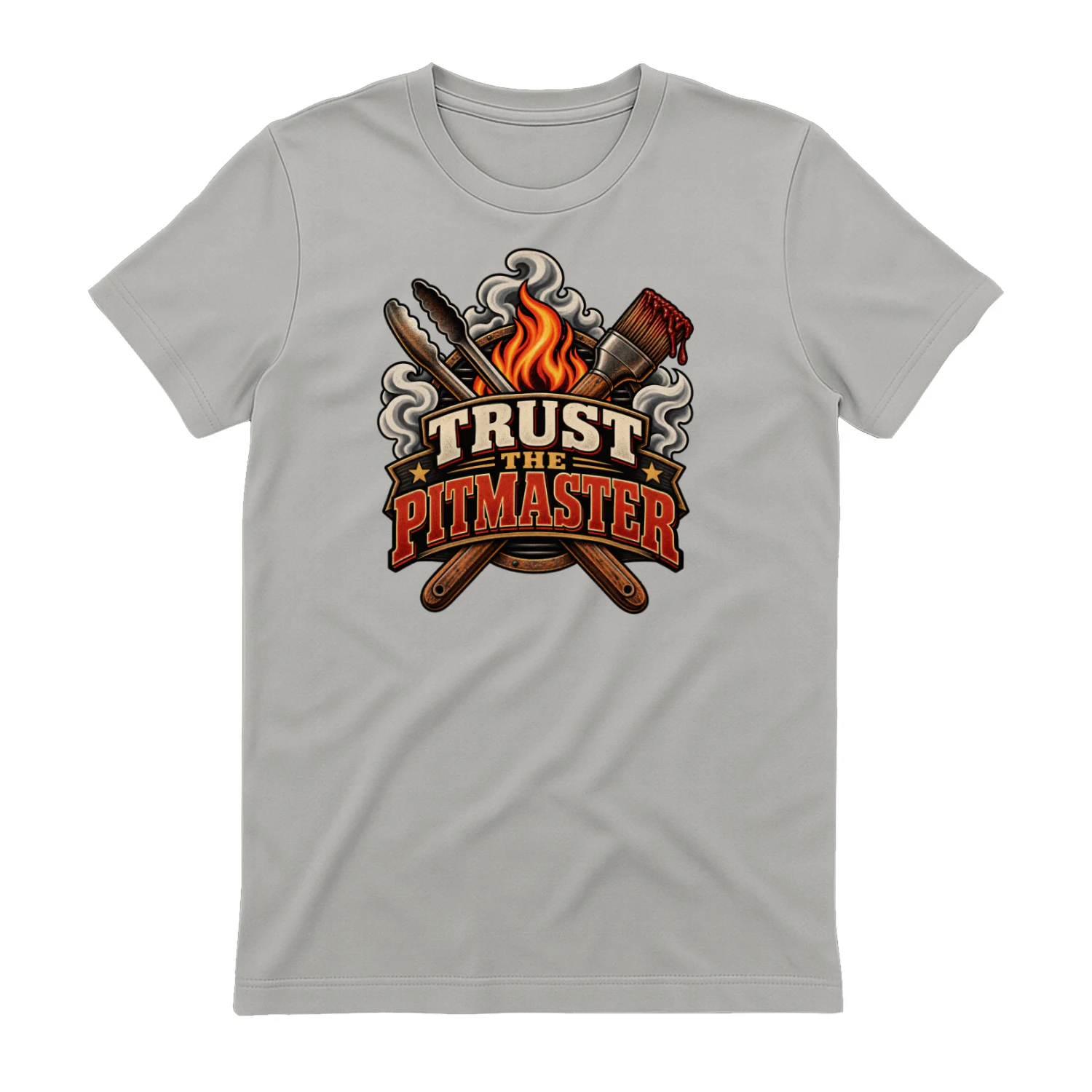
Trust the Pitmaster
Official Pit Culture merchandise from Texas Thread Theory, built for people who live for fire, smoke and low-and-slow weekends.

