The direct answer: this cook is about control, not speed
Kosmos Q’s live fire tri-tip method is built around one simple idea: if you want the meat to come out right, the fire has to be managed with purpose the whole way through. The cook is not presented as a quick grill job. It is a live-fire process that depends on a steady coal bed, layered seasoning, close attention to heat, and a proper rest before slicing. The payoff is a tri-tip that gets served simply, with chimichurri and a slider roll, once the fire work is done.
That matters because the video makes a clear case for tri-tip as a showpiece cook. It is not the fastest route to dinner, but it is the kind of cook that rewards patience and makes the pit look intentional from start to finish.
Building a coal bed that can hold steady heat
The foundation of the cook is the fire. Kosmos Q starts with a bed of lump coal, then adds fire starters and hickory sticks on top. The reason, as he explains it, is consistency: the wood and coals together create a more even heat source than relying on starter sticks alone.
Once the coals are going and embers begin to fall, he spreads them under the grill so the heat runs evenly from side to side and front to back. That detail is doing a lot of work. Live-fire cooking can look improvised, but this cook is organized around coverage. The goal is not just flame; it is a constant bed of heat that can support the meat for the duration of the cook.
He also keeps feeding the fire. That part matters because the embers do not stay steady on their own. In his telling, the cook only stays alive if more logs are added and more coals are kept going. The method is less “build a fire and forget it” and more “build, maintain, and rebalance.”
Why the rub order and fat cap choice matter
Before the tri-tip goes on, Kosmos Q seasons it in layers. He starts with mustard as a binder, then applies the coarse rub first, followed by the finer garlic jalapeño rub. He gives a plain reason for doing it that way: the coarse seasoning gets set and bound first, and the finer rub can fall into the small crevices on top.
This is one of the clearest practical choices in the video. The order is not framed as mystique. It is about coverage and texture. The cook also distinguishes between a pre-trimmed tri-tip and one cooked asado style with the fat left on. Both are shown, and the fat cap is treated as a real variable rather than an afterthought.
Just as important, he flags the grain early. Tri-tip has competing grain directions, and he warns that this is where a lot of people mess it up. Before the meat ever hits the fire, he is already thinking about how it will be sliced later. That is the right way to read the video: the cook is planned backward from the cut.
Using hand-height and grill height to control the cook
Once the fire is established, the next job is setting distance. Kosmos Q uses the old hand-over-the-fire check: if he can hold his hand over the heat for longer than six seconds, the grill is probably too high, so he lowers it. In the video, he starts at about eight seconds and then drops the grate slightly.
That hand test becomes the practical bridge between fire and meat. It is not treated like a rigid formula. It is a way to tune the pit to the heat coming off the fire at that moment. Then the tri-tip goes on fat side first.
The cook is also honest about pace. This is not the fastest method, and he says so directly. But that is the point. If the goal is to show off for guests, the slower live-fire route gives him more control over color, crust, and timing. He even shifts the two pieces around the grill as they color at different speeds, then lowers and raises them to keep the cook even.
That movement tells you what this method values: adjustment. He is not waiting for the meat to do all the work. He is managing position, distance, and ember placement as the cook progresses.
Pulling at temperature, resting hard, and fixing the slice
Near the finish, the tri-tip gets a deeper sear and crust. Kosmos Q says he is shooting for 127 to 130 in the center, and he pulls the meat when it reaches 127. He also makes clear that doneness is determined by a probe, not by juices alone. The visible red juices are noted, but they are not the deciding factor.
That part of the video leads straight into the rest. The meat is wrapped and left to sit for 20 to 30 minutes at minimum, and he says an hour is even better if the cook can hold it. The rest is not optional in his framing. It is part of the method, right up there with the fire and seasoning.
Then comes the most important technical step after the cook: slicing. Tri-tip has two grain directions, and he separates the cut where the seam changes the way the grain runs. From there, each section gets sliced in the direction that keeps the meat tender. That is the mistake many people make with this cut, and the video is useful because it treats that mistake as fixable once the grain pattern is understood.
In other words, the finish is not just about getting the meat off the grill. It is about serving it in a way that respects how the cut is built.
Chimichurri and a slider are the right kind of finish here
While the tri-tip rests, Kosmos Q makes a simple chimichurri. He blooms the seasoning with red wine vinegar first, then adds extra virgin olive oil in roughly equal measure. He keeps it straightforward and sets it aside to use later.
That finish fits the rest of the video. The chimichurri is not trying to compete with the beef; it is there to sharpen it. The final plate is a slider on a Hawaiian roll with a slice from the fatty end of the tri-tip and a spoonful of sauce. It is a small serving, but it lands as the natural endpoint of the cook: fire, crust, rest, slice, and eat.
What this video really teaches
The strongest thing about this cook is that it does not treat live-fire tri-tip like a gimmick. It treats it like a sequence of decisions. Build enough fire. Keep the coals alive. Season in the right order. Read the heat. Move the meat. Pull it at temperature. Rest it. Slice it correctly.
That sequence is why the video works as a teaching piece. It shows that the difference between a decent tri-tip and a good one is not one dramatic trick. It is a chain of smaller choices that all point in the same direction.
Watch the original video: https://www.youtube.com/watch?v=7pC0wVuOPyA
PIT CULTURE MERCH
Two Pit Culture designs from Texas Thread Theory for people who live for fire, smoke and low-and-slow weekends.
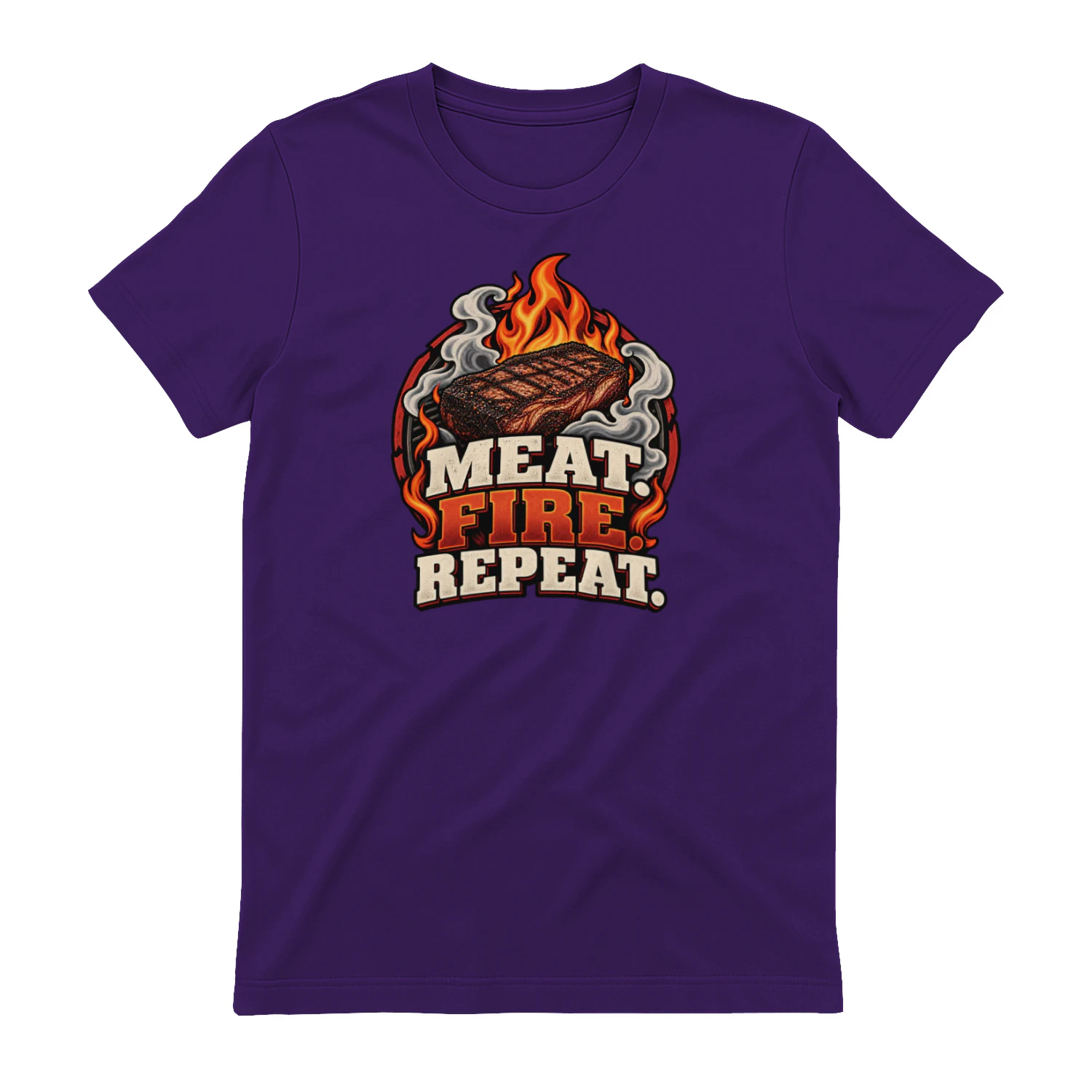
Meat. Fire. Repeat.
Official Pit Culture merchandise from Texas Thread Theory, built for people who live for fire, smoke and low-and-slow weekends.

Pit Culture Around the Pit
Official Pit Culture merchandise from Texas Thread Theory, built for people who live for fire, smoke and low-and-slow weekends.

