Rebuilding a pitmaster slider from memory and muscle
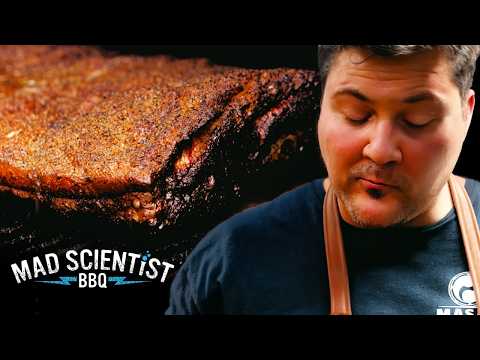
The beef cheek slider in this Mad Scientist BBQ video is not treated like a novelty act. Jeremy Yoder frames it as a recreation of a recipe he cooked on Food Network’s Pit Masters, and that framing matters. He is not only showing a method; he is rebuilding a specific dish from a specific set of memories and constraints. The result is a barbecue feature that is less about a flashy sandwich and more about how a tough cut becomes soft, rich, and balanced when every step has a purpose.
The direct answer to what makes the cook work is simple: he keeps the seasoning restrained, smokes the cheeks until they build bark, finishes them in Wagyu tallow, and then offsets the richness with a jalapeño slaw. That sequence is the whole point of the video. Nothing gets added just to make the plate louder.
Why beef cheeks fit the smoke-and-confit treatment
Yoder explains beef cheeks in the most useful way possible: they are heavily worked muscles with a lot of connective tissue. That makes them a poor candidate for steak-style cooking and a strong candidate for low-and-slow barbecue. He treats that as the reason to choose the cut in the first place. It is not about being clever with an overlooked ingredient. It is about understanding that a cut this used will reward time, heat management, and patience.
He trims the cheeks, removes any silver skin, and points out the marbling running through the meat. Then he seasons them simply with salt, with the option of salt and pepper or seasoning salt and pepper. He is careful not to bury the beef flavor under a pile of seasoning. The logic is straightforward: beef cheeks already bring the character, so the exterior seasoning should support that rather than compete with it.
That choice also sets up the texture contrast he wants later. The goal is not to make the inside and outside feel the same. He wants a bark on the exterior and a very soft interior, so the cook is organized around that difference from the start.
The airflow lesson hidden inside the smoker setup
One of the more useful parts of the video is not the slider itself but the smoker setup behind it. Yoder talks through the fact that the original filming took place at elevation, which changed how the offset smoker behaved. His point is practical: at higher elevation, with less oxygen available in the air, the fire needs more airflow to stay alive and stable.
That is why he says he ran the stack more open, kept the firebox door more open, and took out anything that would restrict movement inside the smoker. He specifically mentions removing the diffuser plate and leaving only the grate. In his telling, that helped him avoid choking the fire. He also contrasts that with setups that kept too much hardware in place and struggled because the smoker could not breathe properly.
The takeaway is not just for competition cooks at altitude. It is a useful reminder that an offset does not perform in the abstract. The pit’s internal parts shape how the fire behaves, and when the fire has less oxygen to work with, anything that slows the flow can turn into a problem. Yoder presents airflow as part of the recipe, not a background detail.
What the tallow finish changes
After the cheeks build color and bark, Yoder moves them into a pan and covers them in Wagyu tallow. This is the stage that turns the cook from a smoked beef cheek dish into a beef cheek confit. He is clear about the reason: the tallow protects the meat, helps preserve moisture, and carries the cheeks the rest of the way to tenderness.
He also ties the step to the conditions of the cook. At elevation, he says, there is more evaporative cooling and more moisture loss. The fat bath is his way of protecting the cheeks while they finish. He does not present confit as a trick for its own sake. He presents it as a finishing move that solves a specific problem and adds succulence.
The texture language in the video is the important part. He checks the cheeks around 204 to 206 degrees and describes them as buttery soft. He also notes the gelatin that has cooked out of the connective tissue. That detail matters because it explains why the finished meat looks and eats the way it does: the long cook changes the structure of the cheeks, and the tallow finish gives that transformation a rich frame.
Building the slider for contrast, not clutter
The sandwich itself follows the same logic as the cook. Yoder does not pile on extras. He slices the cheeks rather than chopping them, because he wants the meat to feel like meat, not a hash. He even trims out connective tissue in the finished slices for what he describes as a better bite. That is an important distinction: he is preserving the texture of the meat while still cleaning up the parts that would interfere with eating.
Then comes the slaw. He describes it as cabbage, carrot, jalapeño, lime juice, cider vinegar, mayonnaise, Dijon mustard, and salt. That combination is doing a very specific job. The slaw brings crunch, acid, and a little heat. In other words, it cuts through the richness of the cheeks instead of echoing it.
That balance is why the slider sounds satisfying rather than heavy. The beef is smoky, tender, and rich. The slaw is sharp, cool, and bright. The bun simply holds the whole thing together. He even notes that sauce is optional and intentionally omitted in the competition-style build so the flavors stay clear. That restraint makes sense in the context of the recipe: the meat is already carrying the depth, and the slaw gives the sandwich its edge.
Why the final bite works
There is a reason this video lands as a feature about method rather than a one-off sandwich idea. Every decision points in the same direction. The seasoning stays simple so the beef flavor can stay front and center. The smoke builds bark. The tallow finish preserves moisture and softness. The slaw provides the sharpness and crunch needed to keep the slider from collapsing under its own richness.
Yoder’s own tasting notes at the end reinforce that structure. He calls out the jalapeño as a strong counterpoint and points to the gelatin and smoke ring as signs that the cook did what it was supposed to do. Even the visual of the beef running pink from edge to edge is part of the story he is telling: this is a cut that benefits from the long path from tough muscle to spoon-tender meat.
For readers looking for a practical read on beef cheek sliders, that is the real value here. The recipe is not built on novelty. It is built on understanding what the cut needs and giving it exactly that, in the right order, with nothing extra getting in the way.
Watch the original video: https://www.youtube.com/watch?v=6uCDm5IknjU
PIT CULTURE MERCH
Two Pit Culture designs from Texas Thread Theory for people who live for fire, smoke and low-and-slow weekends.

Smoke Therapy
Official Pit Culture merchandise from Texas Thread Theory, built for people who live for fire, smoke and low-and-slow weekends.

Sorry, Can't. I'm Smoking Meat.
Official Pit Culture merchandise from Texas Thread Theory, built for people who live for fire, smoke and low-and-slow weekends.