A barbecue sauce that does not look like barbecue sauce
Alabama white sauce breaks almost every visual expectation people bring to barbecue. It is pale instead of red, tangy instead of sweet-forward, and built around mayonnaise rather than tomato.
That difference is not a modern gimmick. The Encyclopedia of Alabama traces the sauce to Robert "Big Bob" Gibson in Decatur, Alabama, in 1925. Gibson used the sauce on smoked chicken, making it part of a specific local barbecue tradition long before white sauce became a menu shorthand around the country.
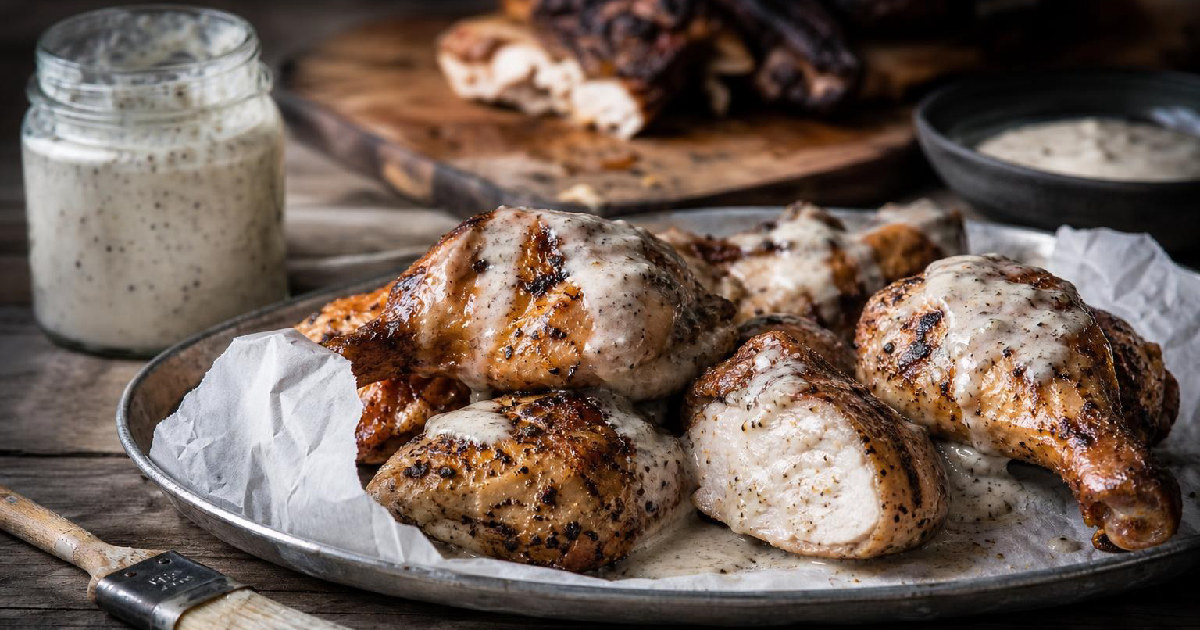
The original use was smoked chicken
The historical record is unusually clear. Gibson cooked split chickens over hickory smoke and finished them in the white sauce. The Encyclopedia of Alabama describes the sauce as a combination of mayonnaise, apple cider vinegar, lemon juice, black pepper and salt.
Big Bob Gibson Bar-B-Q still sells its Original White Sauce and describes the flavor as tangy and peppery. The restaurant says the sauce has been served since 1925 and now pairs it with poultry, pork, seafood, wild game and side dishes.
The expansion in uses is real, but the chicken connection is the important starting point. White sauce makes the most sense when you understand it as a sharp, creamy counterpoint to smoke and rendered poultry fat.
Why the flavor profile works
Mayonnaise provides body and fat. Vinegar and lemon bring acidity. Black pepper gives the sauce its bite. Instead of adding another layer of sweetness to barbecue, the sauce cuts through richness.
That balance is why white sauce works differently from a thick tomato-and-molasses style. It can act as a finishing sauce, a dip or a light coating without burying the smoke underneath a heavy glaze.
Alabama barbecue is bigger than one sauce
White sauce became Alabama's most recognizable barbecue signature, but it is only one part of the state's barbecue story. The Encyclopedia of Alabama notes that different parts of the state developed their own traditions, including pork shoulder, ribs and a range of vinegar- and tomato-based sauces.
That context matters. Alabama white sauce is distinctive precisely because it came from one local pit tradition and then grew outward. It is not a universal Alabama rule and it is not meant to replace every red sauce on the table.
How to use it at home
For backyard barbecue, the most historically grounded place to start is chicken. Smoke or roast the chicken until it is fully cooked, then use white sauce as a finishing sauce or dip rather than brushing it on early like a sugary glaze.
From there, it makes sense with pulled pork, turkey and other rich meats where acidity can lighten each bite. It also works as a base for slaw or potato salad if you want the flavor without turning the plate into another sauced meat course.
The reason it has lasted
White sauce survived because it solves a practical flavor problem. Smoke and fat are powerful. A cold, sharp, peppery sauce gives the palate contrast.
A century after Bob Gibson started serving it in Decatur, the sauce is still tied to the same basic idea: smoked meat does not always need more sweetness. Sometimes it needs acid, pepper and something creamy enough to cling to the bite.
PIT CULTURE MERCH
Two Pit Culture designs from Texas Thread Theory for people who live for fire, smoke and low-and-slow weekends.

Respect the Bark
Official Pit Culture merchandise from Texas Thread Theory, built for people who live for fire, smoke and low-and-slow weekends.
Smoke Makes Everything Better
Official Pit Culture merchandise from Texas Thread Theory, built for people who live for fire, smoke and low-and-slow weekends.