The stall is not your smoker giving up
A brisket can climb steadily for hours and then appear to hit a wall. The internal temperature hovers in roughly the mid-150s to mid-160s and barely moves, sometimes for a long stretch. That plateau is the brisket stall.
ThermoWorks explains the stall as evaporative cooling. Moisture moving to the surface of the meat evaporates and carries heat away. For a while, the cooling effect can offset the heat coming from the smoker, so the internal temperature rises much more slowly even though the pit is still running normally.
That means the first rule of the stall is simple: do not panic. A steady pit and a stalled brisket are not contradictory. They are a normal part of a long cook.
What wrapping actually does
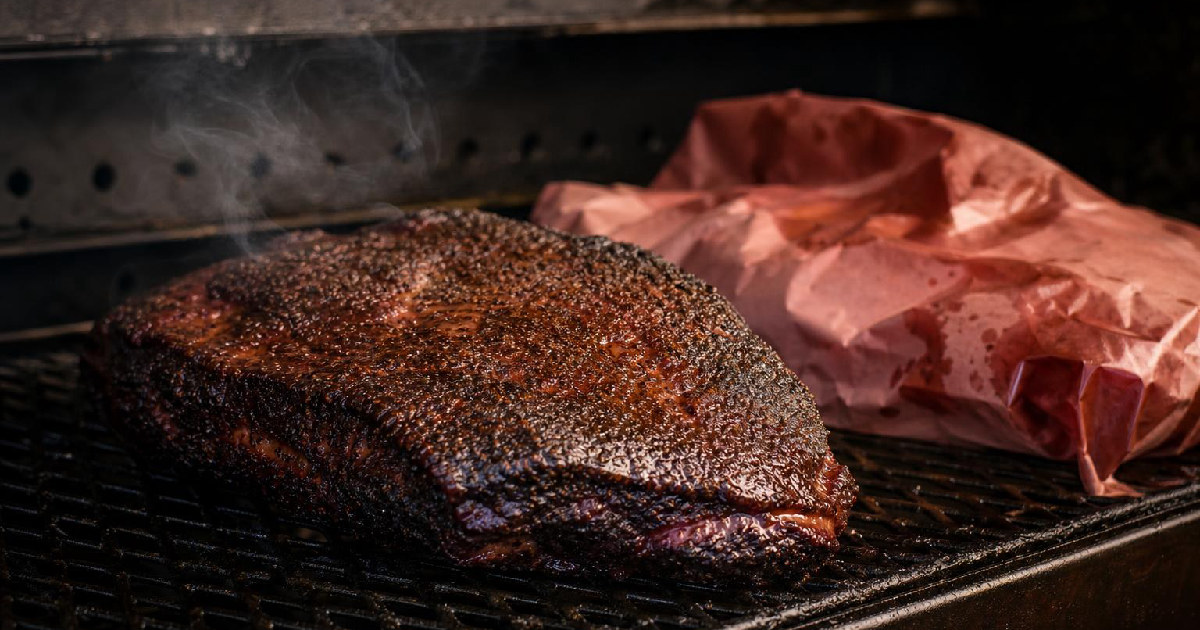
Wrapping changes the environment around the brisket. ThermoWorks recommends wrapping around the point where the stall begins, while Weber describes wrapping in the later stage of a low-and-slow cook to help retain moisture and move the brisket through the final hours.
Butcher paper is popular because it is breathable compared with a sealed wrap. Weber specifically notes that the brisket develops bark while cooking uncovered, then can be wrapped once the thickest part reaches about 65 to 70 C, or roughly 149 to 158 F. That gives the bark time to form before the wrap changes the cooking environment.
The practical takeaway is that wrapping is a tool, not a requirement. If the bark looks where you want it and the cook is running behind, wrapping can shorten the stall and reduce moisture loss. If the bark still looks soft or pale, leaving the brisket exposed longer gives the exterior more time to develop.
Do not chase one magic number
ThermoWorks commonly uses the low 200s Fahrenheit as a finishing range for brisket, and Weber gives a similar final range of about 90 to 95 C. Those numbers are useful checkpoints, but they are not the whole decision.
A finished brisket should feel tender when probed in the flat and point. The probe should slide in with very little resistance. One brisket may feel ready a few degrees earlier than another because thickness, fat, connective tissue and cooking conditions are never identical.
Temperature tells you where to start checking. Texture tells you when the meat is actually ready.
Resting is part of the cook
Both ThermoWorks and Weber also build a meaningful rest into their brisket guidance. Resting gives the meat time to settle after a long cook and gives you a much wider serving window than trying to time the smoker to the exact minute dinner starts.
That is especially useful for backyard cooks. Finishing early and holding a wrapped brisket warm is far less stressful than trying to force a stalled brisket to finish on a deadline.
A simple stall strategy
For a straightforward backyard approach, let the brisket cook unwrapped until the bark has formed and the internal temperature has entered the stall range. If the bark looks good and you want to speed the cook, wrap it in food-grade butcher paper. Continue cooking until the brisket is in the typical finishing range, then start judging tenderness rather than chasing a single exact temperature.
Most importantly, build extra time into the schedule. The stall is not a mistake to fix. It is a stage to manage.
PIT CULTURE MERCH
Two Pit Culture designs from Texas Thread Theory for people who live for fire, smoke and low-and-slow weekends.

BBQ Is Not Fast Food
Official Pit Culture merchandise from Texas Thread Theory, built for people who live for fire, smoke and low-and-slow weekends.
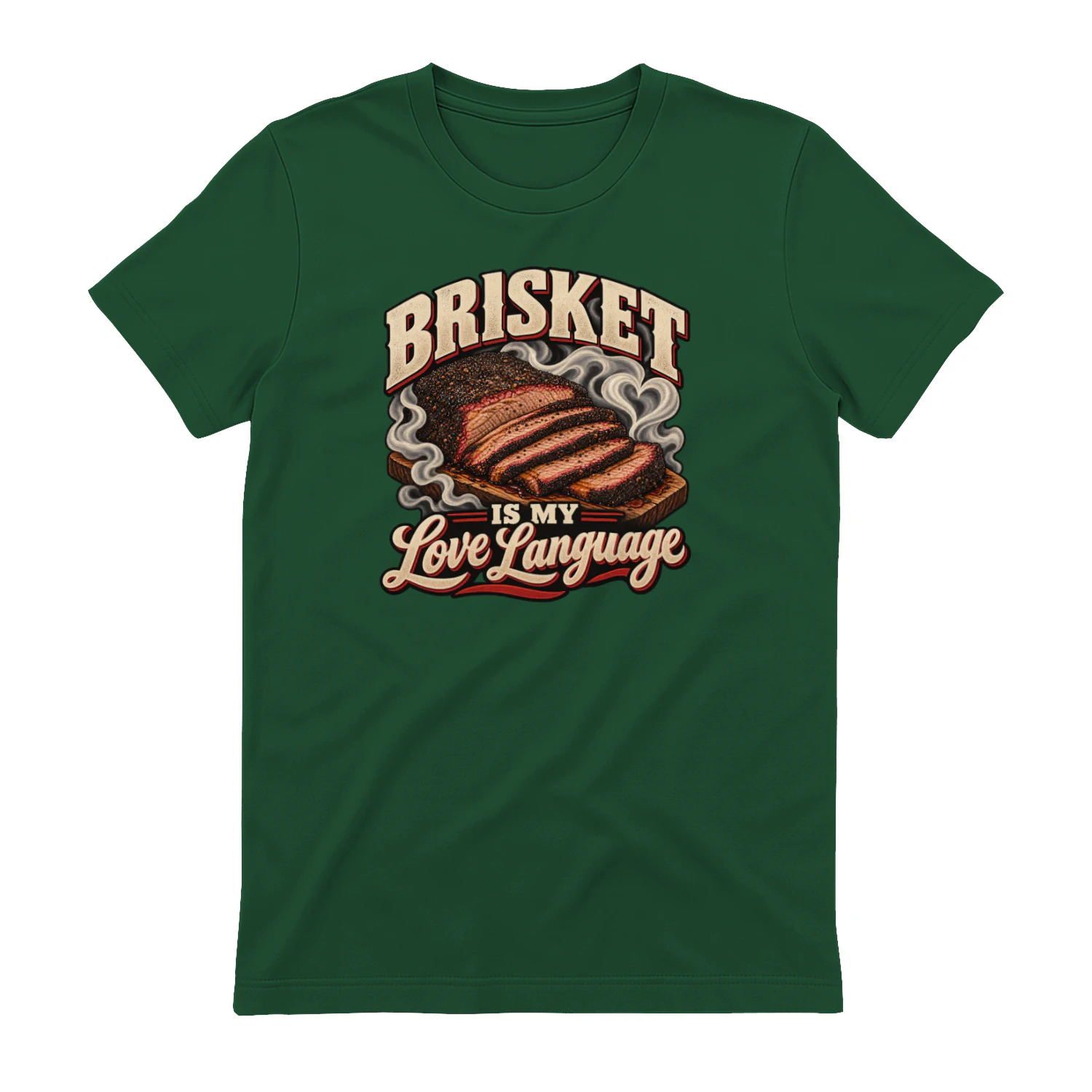
Brisket Is My Love Language
Official Pit Culture merchandise from Texas Thread Theory, built for people who live for fire, smoke and low-and-slow weekends.