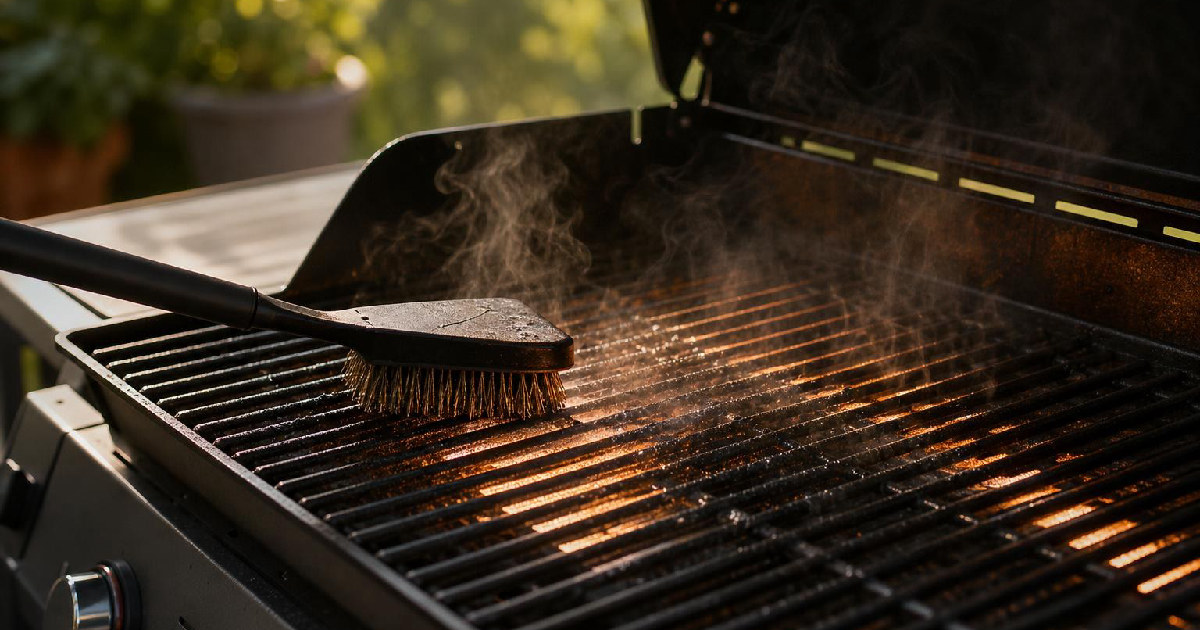
A grill covered in last cook's residue can make the next session feel dirty before the food ever hits the grate. The instinct is often to attack the grill cold with a brush. Weber's own care guidance points in the opposite direction: heat the grill first, then clean the cooking surface.
Heat changes the job
When old grease and food residue are cold, they can cling stubbornly to the grate. Preheating the grill dries and loosens much of that material, making it easier to remove with an appropriate grill brush. Weber recommends preheating on high with the lid closed before brushing the grates clean.
That sequence also means the cleaning step becomes part of your pre-cook routine. Instead of ending every barbecue by scrubbing a greasy grate while everyone else is eating, you can let the grill cool safely after the meal, then deal with the cooking surface once the next fire is hot.
Preheating does more than clean
A properly preheated grill gives the grate time to come up to cooking temperature. That matters for searing and for reducing the tendency of food to stick immediately to a cool surface. The target temperature will depend on the food, but the principle is the same: the grate itself needs heat, not just the air under the lid.
Weber's gas-grill guidance commonly pairs a high-heat preheat with grate cleaning before the cook temperature is adjusted. Its cast-iron grate care guidance follows the same basic order.
The brush still matters
Heat does not make every tool safe. Use a brush or scraper that is appropriate for your grate material and inspect it regularly. A worn tool can be ineffective or unsafe. If your grill manufacturer specifies a particular cleaning method, follow that guidance rather than assuming one brush is right for every surface.
Porcelain-coated cast iron, bare cast iron, and stainless steel do not all behave exactly the same way. Aggressive scraping can damage some finishes, while neglect can allow heavy deposits to build up.
Do not confuse clean with stripped bare
Cooking grates do not need to look factory-new after every session. The goal is to remove loose residue, burnt food, and buildup that can affect flavor or sticking. A light, maintained surface is different from a thick layer of old debris.
Sauces and sugary marinades are especially likely to leave stubborn deposits. Weber advises applying barbecue sauce late in the cook on its cast-iron grate guidance, which also reduces the amount of sugar that burns onto the cooking surface.
The practical takeaway
Make grate cleaning part of the warm-up. Preheat the grill, brush the hot grates with the correct tool, then set the cooker for the food you are making. It is a simple routine, but it improves cleanliness, cooking consistency, and the condition of the grates over time.
PIT CULTURE MERCH
Two Pit Culture designs from Texas Thread Theory for people who live for fire, smoke and low-and-slow weekends.

Respect the Bark
Official Pit Culture merchandise from Texas Thread Theory, built for people who live for fire, smoke and low-and-slow weekends.

Smoke Makes Everything Better
Official Pit Culture merchandise from Texas Thread Theory, built for people who live for fire, smoke and low-and-slow weekends.