Low-and-slow cooking rewards patience, but it should never rely on guesswork. A smoker can look steady from the outside while the cooking chamber drifts, and a brisket, pork shoulder, chicken or rack of ribs can look finished before the center has reached a safe temperature. That is why a basic smoking setup benefits from two separate measurements: one for the cooker and one for the food.
1. Track the cooking chamber, not just the dial
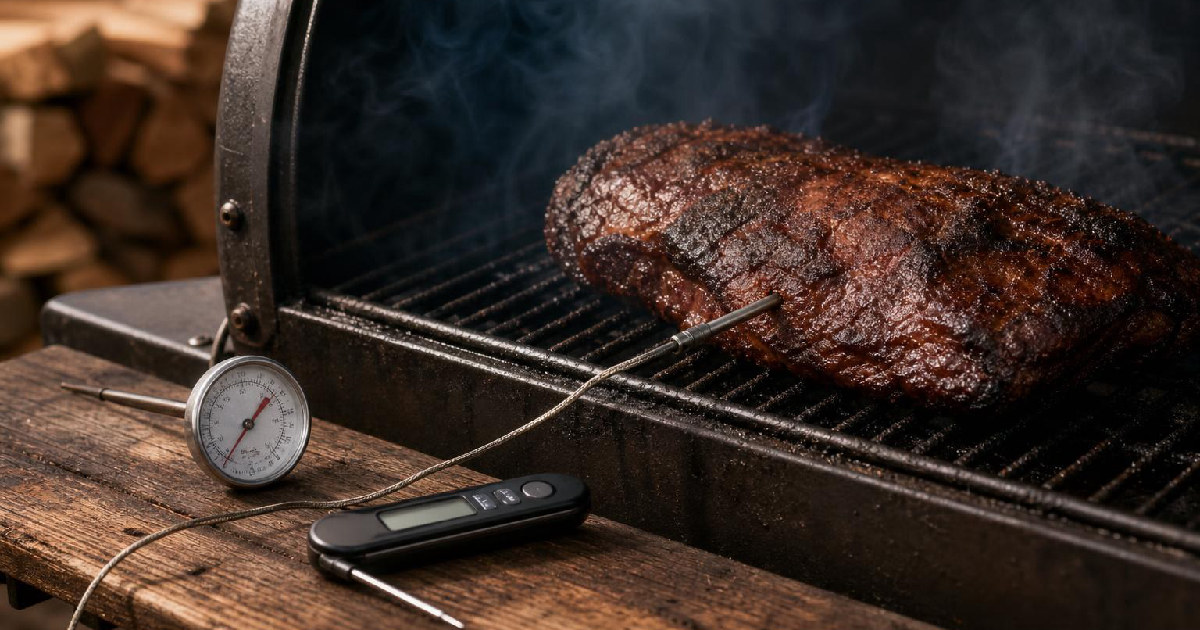
USDA Food Safety and Inspection Service guidance says a thermometer should be used to monitor the air temperature in the smoker or grill. Its smoking guidance identifies a cooking range of 225°F to 300°F. A grate-level probe is especially useful because the temperature where the meat sits may not match the number shown on a lid thermometer.
The practical goal is consistency. Large swings can stretch cook times, dry the exterior or encourage cooks to make unnecessary vent adjustments. Place the pit probe near the food without letting it touch the meat or a metal grate bar directly. Then watch the trend instead of reacting to every small fluctuation.
2. Use a separate thermometer for the food
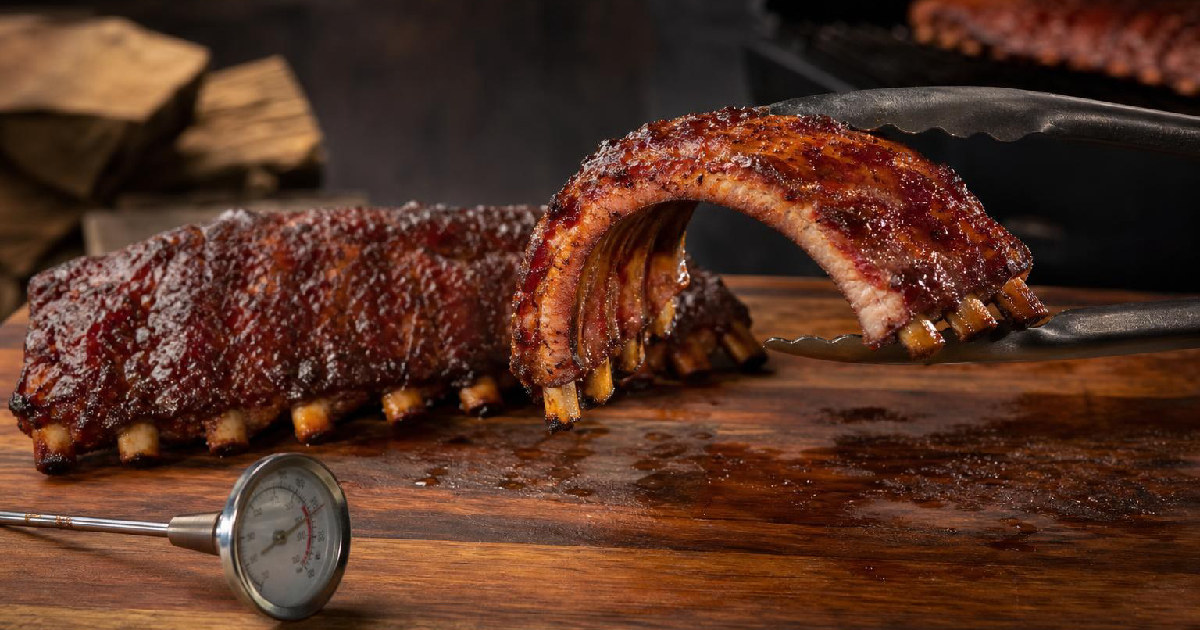
Pit temperature tells you what the cooker is doing. It does not tell you whether the center of the food is safe. USDA guidance therefore also calls for a food thermometer. Insert the probe into the thickest part of the meat and avoid bone, large pockets of fat and the cooking surface.
Safe minimum temperatures vary by food. Poultry should reach 165°F. Ground meats should reach 160°F. Whole cuts of beef, pork, lamb and veal have a USDA minimum of 145°F followed by a three-minute rest. Barbecue cooks may intentionally take some cuts much higher for tenderness, but tenderness targets and food-safety minimums are not the same thing.
3. Do not use color as the safety test
Smoke can change appearance in ways that make visual cues misleading. Poultry can remain pink even after it has reached a safe temperature, and a dark bark does not prove the center of a roast is ready. The thermometer is the objective check.
4. Protect the food before and after the cook
The fire is only one part of the safety plan. USDA defines the food-safety danger zone as 40°F to 140°F, where bacteria can grow quickly. Keep raw food cold until it is ready for the pit, and keep cooked food hot or cool it promptly instead of letting trays sit at outdoor temperatures for extended periods.
The Pit Culture takeaway
A dependable smoking routine is simple: measure the cooker, measure the food, and treat time and appearance as supporting information rather than the final safety decision. Two thermometers remove a lot of uncertainty without changing the craft of barbecue. They simply give the pitmaster better information while the smoke, bark and texture develop.
PIT CULTURE MERCH
Two Pit Culture designs from Texas Thread Theory for people who live for fire, smoke and low-and-slow weekends.
Pit Culture Core Smoker
Official Pit Culture merchandise from Texas Thread Theory, built for people who live for fire, smoke and low-and-slow weekends.
Pit Culture Fire & Smoke
Official Pit Culture merchandise from Texas Thread Theory, built for people who live for fire, smoke and low-and-slow weekends.